IN THE SPOTLIGHT OF ATTENTION 

The room is dark. A darkness that robs you of all sense of direction. Then a click. A beam of light cuts through the blackness. A face. Water. The edge of a shore. And darkness again. Nothing here is immediately apparent.

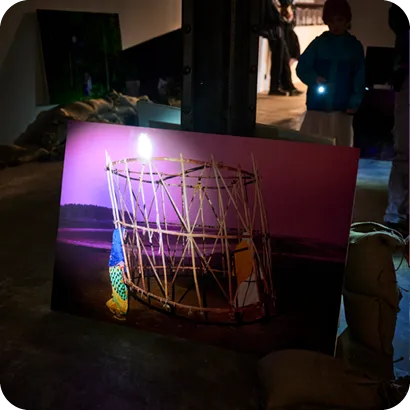
March 2026, Photobook Festival Leipzig: Visitors move through the room with P7R flashlights – searching, feeling their way forward. They choose their own fragments, direct their own focus, and experience the exhibition only in pieces. One thing quickly becomes clear: most of the exhibition initially remains invisible. It lies hidden in the darkness, waiting to be discovered. “Our intention was to translate this searching into the space itself - this uncertainty, this not-knowing,” says Calin Kruse, Curator of the Exhibition.

INSIDIOUS CHANGE

This is precisely the feeling Arko Datto seeks to convey with his exhibition Where do we go when the final wave hits? The Indian photographer lives in Kolkata, on the edge of the Sundarbans – an extensive mangrove region in the southern Ganges Delta. Stretching across parts of Bangladesh and West Bengal, it is one of the largest delta regions in the world. “I feel deeply connected to the region. The Sundarbans are part of my own living environment,” Arko explains.

Since 2015, Arko has documented the region photographically – a place located only around 150 kilometers from his home. Rising sea levels and increasing soil salinity are steadily destroying habitats.

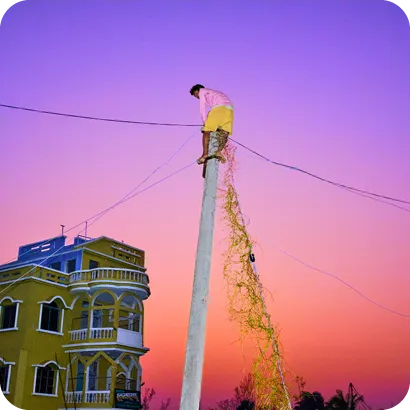
Arko is not searching for spectacular images, but for something more difficult to grasp. His photographs do not show storms or dramatic tidal waves. Instead, they document a slow transformation: the gradual loss of habitat – and the uncertainty that becomes part of everyday life.

At night, this uncertainty becomes especially visible. In many parts of the Sundarbans, reliable electricity is far from guaranteed. Without light, the water loses its contour. It becomes invisible – and therefore unpredictable. “When the water slowly rises, you don’t know when it will come – or where from,” says Arko.

MAKING THE IMPACTS OF CLIMATE CHANGE VISIBLE


So Arko begins photographing in the dark. The harsh flash of his camera brings into focus the everyday struggles of the people living in the delta.

Direct and almost surreal, his images condense a feeling: life in a state of permanent uncertainty. Around 300 million people live in the delta. Many contribute very little to the climate crisis - yet they are among the first to suffer its consequences. “I am not an activist,” says Arko. “I want my images to be strong enough that people can use them in their fight against the climate crisis.” What impact these images may have - and what may emerge from them - he leaves to those willing to look.

At the Leipzig exhibition, this approach becomes spatially tangible for the first time. Visitors move through the darkened exhibition space carrying the light of flashlights themselves. They decide what becomes visible - and what remains unseen. “Visitors are not just observers. They decide themselves where to direct their light,” says Calin.

Making parts of the exhibition visible becomes a conscious act. And with that, perhaps, a form of responsibility. Maybe this is precisely the moment when something shifts. A gaze that lingers longer. An image that stays behind. An active decision: to look closer, even when it feels uncomfortable.

IN THE SPOTLIGHT OF ATTENTION

The room is dark. A darkness that robs you of all sense of direction. Then a click. A beam of light cuts through the blackness. A face. Water. The edge of a shore. And darkness again. Nothing here is immediately apparent.

March 2026, Photobook Festival Leipzig: Visitors move through the room with P7R flashlights - searching, feeling their way forward. They choose their own fragments, direct their own focus, and experience the exhibition only in pieces. One thing quickly becomes clear: most of the exhibition initially remains invisible. It lies hidden in the darkness, waiting to be discovered. “Our intention was to translate this searching into the space itself - this uncertainty, this not-knowing,” says Calin Kruse, Curator of the Exhibition.

INSIDIOUS CHANGE

This is precisely the feeling Arko Datto seeks to convey with his exhibition Where do we go when the final wave hits? The Indian photographer lives in Kolkata, on the edge of the Sundarbans – an extensive mangrove region in the southern Ganges Delta. Stretching across parts of Bangladesh and West Bengal, it is one of the largest delta regions in the world. “I feel deeply connected to the region. The Sundarbans are part of my own living environment,” Arko explains.

Since 2015, Arko has documented the region photographically – a place located only around 150 kilometers from his home. Rising sea levels and increasing soil salinity are steadily destroying habitats.

Arko is not searching for spectacular images, but for something more difficult to grasp. His photographs do not show storms or dramatic tidal waves. Instead, they document a slow transformation: the gradual loss of habitat – and the uncertainty that becomes part of everyday life.

At night, this uncertainty becomes especially visible. In many parts of the Sundarbans, reliable electricity is far from guaranteed. Without light, the water loses its contour. It becomes invisible – and therefore unpredictable. “When the water slowly rises, you don’t know when it will come – or where from,” says Arko.

MAKING THE IMPACTS OF CLIMATE CHANGE VISIBLE

So Arko begins photographing in the dark. The harsh flash of his camera brings into focus the everyday struggles of the people living in the delta.

Direct and almost surreal, his images condense a feeling: life in a state of permanent uncertainty. Around 300 million people live in the delta. Many contribute very little to the climate crisis – yet they are among the first to suffer its consequences. “I am not an activist,” says Arko. “I want my images to be strong enough that people can use them in their fight against the climate crisis.” What impact these images may have – and what may emerge from them – he leaves to those willing to look.

At the Leipzig exhibition, this approach becomes spatially tangible for the first time. Visitors move through the darkened exhibition space carrying the light of flashlights themselves. They decide what becomes visible – and what remains unseen. “Visitors are not just observers. They decide themselves where to direct their light,” says Calin.

Making parts of the exhibition visible becomes a conscious act. And with that, perhaps, a form of responsibility. Maybe this is precisely the moment when something shifts. A gaze that lingers longer. An image that stays behind. An active decision: to look closer, even when it feels uncomfortable.

MORE SPOTLIGHT STORIES