


In most cases, yes. However, some devices indicate that the battery is empty even though it is still almost full. Check the manufacturer's specifications or test the device to see if it works.
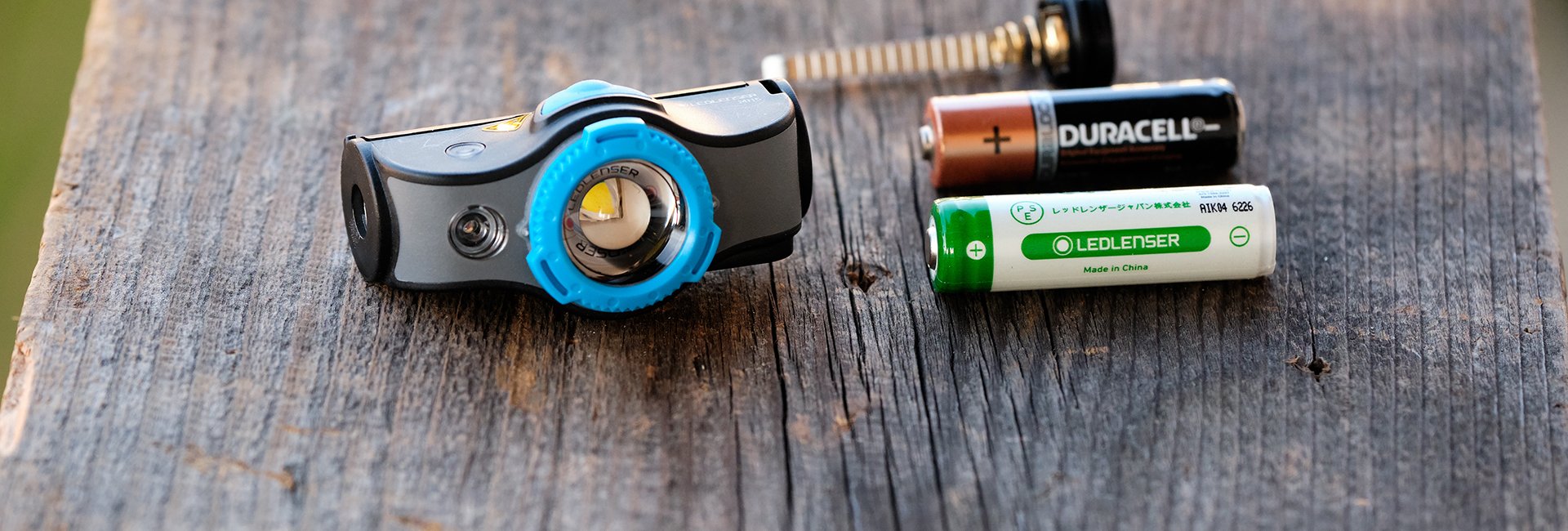

Your choice between batteries and rechargeable batteries should be based on how often you use your devices, what power requirements they have, and what the conditions of use are.
Short recommendation:
- For daily or frequent use: rechargeable battery
- For infrequent use or emergency devices: battery
- For use in extreme cold: lithium battery
Are rechargeable batteries or regular batteries better?
Batteries (primary cells) and rechargeable batteries (secondary cells) differ in terms of their design, use, and service life. Batteries are ready for immediate use and can be stored for long periods, but can only be used once. Rechargeable batteries can be recharged multiple times and are therefore more cost-effective in continuous operation, but require a charger and careful handling.
Advantages and disadvantages of batteries (primary cells)
Advantages
- Ready for immediate use without prior charging
- Very low self-discharge, long shelf life
- Lithium primary cells also function at low sub-zero temperatures
- High initial voltage of 1.5 V, compatible with many devices.
Disadvantages
- Can only be used once, making them more expensive than rechargeable batteries in the long term.
- Environmental impact from manufacturing and disposal.
- Alkaline batteries lose significant power in cold temperatures.
- Voltage drops continuously during operation, which can affect sensitive devices.
Advantages and disadvantages of rechargeable batteries (secondary cells)
Advantages
- Rechargeable, making them significantly cheaper in continuous operation
- Suitable for devices with high power consumption
- LSD NiMH batteries have significantly lower self-discharge than standard NiMH batteries
- Li-ion batteries offer very high energy density in a compact design
Disadvantages
- Slightly higher self-discharge than batteries, therefore regular recharging is necessary
- Require a suitable charger
- Sensitive to deep discharge, overcharging, and extreme heat
- Nominal voltage of 1.2 V (for NiMH) may in rare cases limit the function of individual devices
- Higher initial costs (purchase costs), which only pay off over time
In detail: Differences between rechargeable batteries and regular batteries
Power storage devices in the widely used AAA or AA format are available as rechargeable batteries or disposable batteries. Interestingly, the term “battery” is not technically correct. In fact, a single battery is a so-called primary cell, which only forms a battery when combined with other primary cells of the same size and capacity.
The power storage devices commonly referred to as rechargeable batteries are secondary cells that form a battery pack when combined.
| Criterion | Battery (primary cell) | Rechargeable battery (secondary cell) |
| Reusable | No | Yes |
| Nominal voltage (AA/AAA) | 1.5 V | 1.2 V (LSD-NiMH) or 1.5 V (special rechargeable batteries) |
| Self-discharge | Very low (Alkaline: ~3 to 6%/year, lithium: ~2%/year) | Higher (NiMH LSD: ~15–30%/year, Li-ion: 2 to 5%/month) |
| Performance in cold conditions | Average (alkaline) to very good (lithium) | Average to good (depending on type) |
| Shelf life | 5 to 10 years (alkaline), >10 years (lithium) | 1 to 2 years depending on type |
| Cost per use | High (one-time use) | Low with frequent use |
| Recommended use | Rare use, emergency devices, extreme cold (lithium) | Frequent use, high power consumption, everyday use |
As soon as one or more batteries supply power to a consumer such as an LED headlamp or flashlight, current flows from the negative to the positive pole of the cell. This continues until all electrons have migrated from one pole to the other. An electrochemical redox reaction is responsible for the flow of electrons in every battery. This process is irreversible and continues until the battery's capacity is exhausted.
In contrast to primary cells, this electron flow is reversible in secondary cells or rechargeable batteries. This means that the chemical reaction that causes electrons to migrate in a rechargeable battery becomes reversible when electricity is supplied. To achieve this, the rechargeable batteries, battery packs, or power banks simply need to be inserted into a suitable charger or connected to a power source with a charging cable.
Life cycle assessment of rechargeable and disposable batteries
The production of a NiMH rechargeable battery causes significantly higher environmental impact than that of a disposable battery. Studies show that the total footprint of rechargeable batteries is only reduced compared to the use of alkaline batteries after around 50 complete charging cycles.
In the long term, rechargeable batteries cause fewer emissions in almost all environmental categories. In terms of climate impact, rechargeable batteries perform up to 76% better than alkaline batteries, provided they are used regularly.
What types of rechargeable and disposable batteries are available?
| Cell type | Nominal voltage | Self-discharge | Temperature behavior | Shelf life | Special features |
| Alkaline battery | 1.5 V | Approx. 3 to 6% per year | Moderate in cold conditions | 5 to 10 years | Inexpensive, non-rechargeable |
| Lithium primary cell (Li-FeS₂) | 1.5 V | Approx. 2% per year | Very good in cold conditions | > 10 years | Higher price, very light |
| NiMH rechargeable battery (standard) | 1.2 V | 15 to 30% per month | Moderate in cold conditions | A few months | High current carrying capacity |
| NiMH rechargeable battery (LSD) | 1.2 V | 15 to 30% per year | Moderate in cold conditions | 1 to 2 years | Retains 70 to 85% after 1 year |
| Lithium-ion rechargeable battery | 3.6–3.7 V | 2 to 5% per month | Good in cold conditions | 1 to 2 years | High energy density, sensitive to deep discharge |
5 regole d'oro per la corretta gestione delle batterie ricaricabili e non ricaricabili
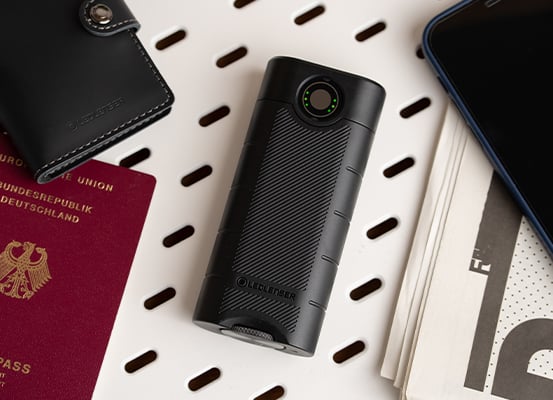
Batterie e batterie ricaricabili devono essere sempre pronte all'uso quando servono. Ad esempio, in caso di interruzione della corrente o se il fusibile nella scatola elettrica è saltato. Con un box per batteria o un power bank di Ledlenser, si è attrezzati al meglio in una situazione del genere. Tuttavia, è necessario tenere presente i seguenti punti:
- Gli accumulatori e le batterie si scaricano gradualmente, con le celle primarie che hanno un vantaggio. Le batterie alcaline tradizionali perdono circa il 6% della carica all'anno, mentre le batterie agli ioni di litio e ai polimeri di litio possono perdere tra il 4-5% al mese.
- Le batterie non dovrebbero essere scaricate completamente per essere conservate né collegate alla rete elettrica per lunghi periodi di tempo.
- Le batterie ricaricabili e le batterie difettose non dovrebbero mai essere smaltite con i rifiuti domestici.
- Se è necessario cambiare le batterie ogni mese, ad esempio nel caso di lampade frontali utilizzate regolarmente, è molto più conveniente utilizzare batterie ricaricabili.
- Le batterie e le pile ricaricabili devono essere sempre conservate in un luogo asciutto e non troppo freddo o caldo. Per proteggere le batterie ricaricabili da urti e pressioni, l'ideale è una scatola per batterie robusta, impermeabile e antipolvere, ad esempio la Batterybox7 Pro.
How are rechargeable batteries and regular batteries disposed of?
Batteries and rechargeable batteries must not be disposed of in household waste as they contain environmentally harmful substances. You can return them free of charge to collection points in stores, supermarkets, drugstores, or recycling centers.
In the case of lithium batteries, it is important to insulate the terminals with adhesive tape before transport to prevent short circuits. Rechargeable batteries should also be taped over at the terminals and transported in non-conductive packaging. Devices with permanently installed batteries belong in the collection for old electrical appliances.
Damaged or leaking cells must be packed separately and securely before disposal. Avoid direct skin contact with chemical residues.
Tip: Here you can find out how to handle leaking batteries correctly and how to save your device.

Rechargeable batteries and batteries in one device with Dual Power
With a Ledlenser Dual Power flashlight, you no longer have to choose between rechargeable batteries and regular batteries. These models work with both the included rechargeable battery and standard batteries.
The advantage of Dual Power technology: in everyday use, you benefit from the cost advantages and sustainability of a rechargeable battery. If you run out of power on the go and there is no charging option available, you can simply insert batteries.
Examples of this are the Ledlenser iH9R headlamp and the P5R flashlight. These two models, as well as others, come with a rechargeable battery but can also be operated with batteries if necessary.
High-quality rechargeable batteries and batteries from Ledlenser
High-quality rechargeable batteries and batteries for flashlights, headlamps, work lights, and other lamps ensure that your devices last a long time and function correctly. We only use high-quality cells that optimally power your lamp and thus ensure a bright light.
- Batteries and rechargeable batteries for your Ledlenser lamps and other devices
- Power banks and battery boxes
- Chargers and cables for your Ledlenser products
Difference between rechargeable and disposable batteries – Frequently asked questions and answers
LSD stands for “Low Self Discharge.” These batteries lose significantly less charge during storage and are still ready for use even after months.
Lithium primary cells retain their performance even at temperatures down to around –20 °C and are the best choice for winter us.
Store them at 30 to 60% charge in a cool, dry place. Avoid complete discharge and high temperatures.
If you use your device frequently, a rechargeable battery saves money in the long run and is better for the environment.